
Travel Season and Spine Stress: How Long Trips Affect Your Back
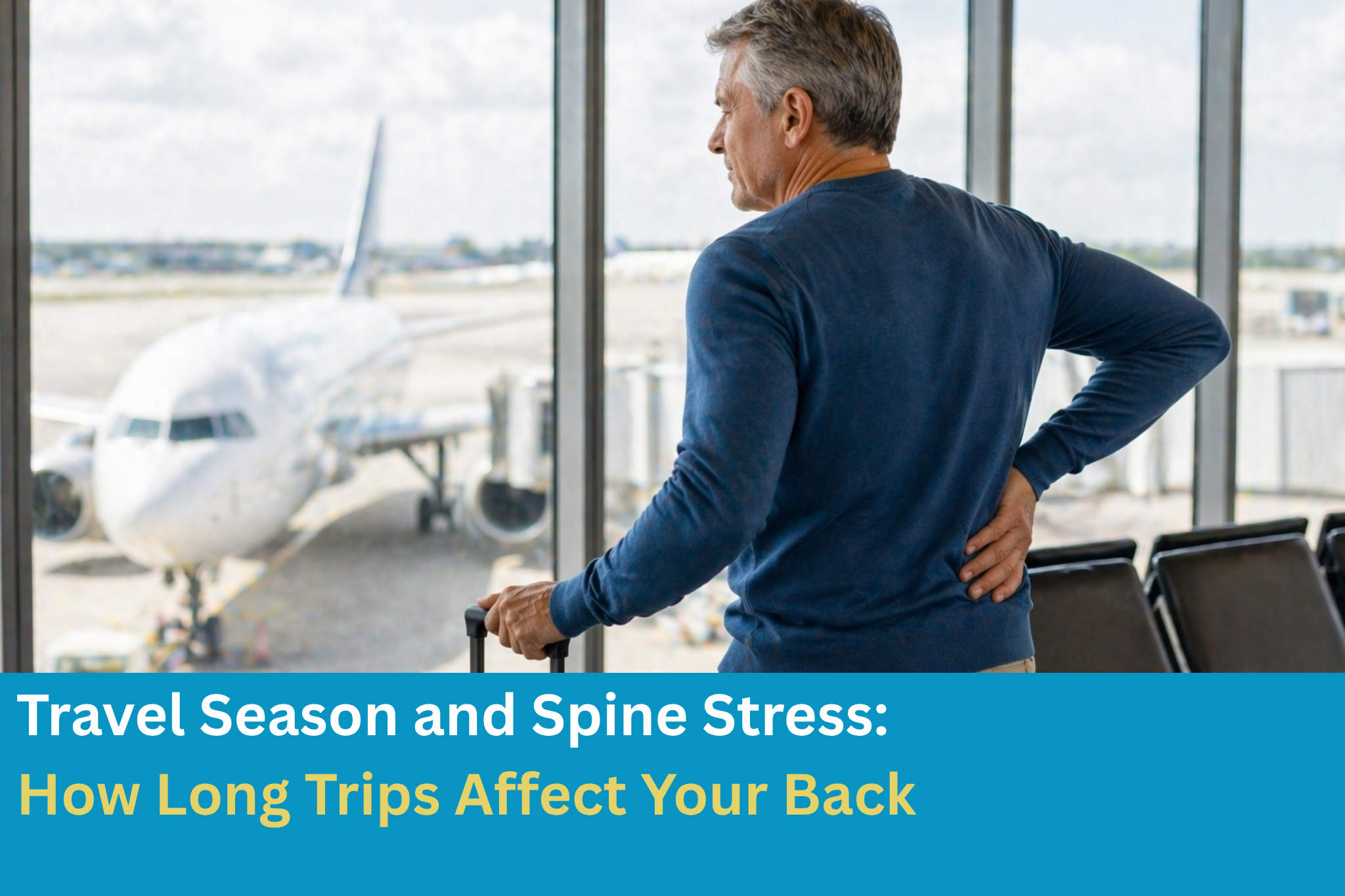
Travel sounds easy in theory. You sit, you ride, you arrive. The body experiences it differently. Hours pass in one position, and movement becomes limited. By the time the trip ends, the back often feels tight or sore and you experience spine stress.
This does not happen by accident. The spine relies on regular movement to stay comfortable. When that movement stops, even for a few hours, stiffness builds. Add in luggage, long lines, and awkward seating, and the strain increases.
Many people notice discomfort after travel but assume it is temporary. In some cases, it is. In others, travel exposes a problem that was already developing.
Why Sitting Too Long Creates Problems
The spine works best when it moves often. Sitting reduces that movement and changes how weight is distributed. Pressure shifts toward the lower back, and muscles begin to tighten.
Over time, posture slips without much awareness. Shoulders round forward, and the lower back loses support. The longer this continues, the more stress builds across the spine.
Even a comfortable seat cannot prevent this completely. The issue is not just posture. It is the lack of change.
A short trip may not cause much trouble. Longer travel days often tell a different story.
Posture Starts Well, Then Fades
Most people begin a trip sitting upright. Within an hour, that position changes. The body looks for comfort and settles into less supportive positions.
You may lean toward a window, shift weight unevenly, or cross your legs for too long. Each adjustment feels minor, but the spine reacts to all of them.
Support helps, but it does not solve everything. A small cushion behind the lower back can improve alignment. Still, the body needs movement more than perfect posture.
Travel Involves More Than Sitting
Travel days include lifting, carrying, and reaching. These movements often happen quickly and without preparation. A suitcase gets pulled from a trunk or lifted into an overhead bin without much thought.
The spine handles these tasks well when the body is ready. After long periods of sitting, muscles are less responsive. That is when strain becomes more likely.
Even light bags can feel heavier in these moments. The issue is not always weight. It is timing and body position.
Early Signs the Back Needs Attention
The body usually gives clear signals before pain becomes a problem. These signs show up during the trip or shortly after.
You may notice:
A steady ache in the lower back
Tightness in the hips after sitting
Tingling in one leg
Difficulty standing fully upright
Relief once you begin walking
These patterns matter. They show how the spine responds to limited movement. Ignoring them often leads to longer recovery later.
Movement Matters More Than Most People Expect
One question comes up often. Is it enough to sit comfortably and rest during travel? The better answer is no. The spine benefits from movement, even in small amounts.
Standing up, stretching, or walking for a few minutes changes how pressure is distributed. Muscles relax, and joints begin to move again.
During road trips, short stops help more than long stretches of driving. On flights, standing when possible makes a difference.
These small breaks add up over the course of a trip.
When Travel Brings Out a Deeper Issue
Sometimes travel does more than cause temporary discomfort. It highlights a condition that has been developing quietly. Sitting for long periods can increase pressure on discs or narrow spaces around nerves.
Pain that travels into the leg often points toward nerve involvement. Numbness or weakness suggests the same pattern. These symptoms should not be dismissed as simple soreness.
At that point, it helps to understand what the spine is doing rather than guessing.
How Evaluation Helps Clarify the Cause
A proper evaluation looks beyond the surface. It connects symptoms with how the spine moves and functions. This process often begins with a physical exam and a detailed history.
Imaging may be used when needed. MRI and CT scans show structures that cannot be seen otherwise. This allows care to focus on the actual source of pain.
Patients who want to learn more about possible conditions can visit the Spine Conditions page.
What Treatment Often Looks Like
Care does not begin with major procedures. Most plans start with simple steps that restore movement and reduce strain. Physical therapy often plays a central role.
Strength improves support around the spine. Movement patterns become more efficient. Over time, daily activity feels easier again.
Other treatments may be considered if symptoms continue. The goal remains the same. Reduce pain and improve function without unnecessary intervention.
Building Better Travel Habits
Travel will always involve some level of strain. The goal is not to remove it completely. It is to reduce how much the spine absorbs.
Small habits make a difference. Move more often, lift with awareness, and pay attention to early signs. These actions help the body handle longer trips more comfortably.
People who stay active between trips often notice fewer issues. A stronger body adapts faster.
If travel consistently leads to pain, it may be time to look closer. Learning more about care options at MacKay Spine & Brain can provide useful direction.
Final Thoughts
Travel changes how the body moves, even when the goal is rest. Long periods of sitting, combined with lifting and limited movement, place stress on the spine.
Most discomfort improves with simple adjustments. When it does not, the pattern deserves attention. Understanding the cause helps prevent small issues from becoming larger ones.

20+ years serving central & northern Wisconsin
Unique dual background - physical therapist and neurosurgeon
Surgery as a last resort - focused on the least invasive path
Our Services
Minimally Invasive Image-Guided Spine Surgery
Our Office Locations
Wausau, WI Office
505 S 24th Avenue, Suite 200, Wausau, WI 54401
Stevens Point, WI Office
4501 WI-66, Suite 200, Stevens Point, WI 54482
